Advancement at the
Inflection Point
The Advancement Lab. November 5 and 6, 2026.
Omni Tempe Hotel at Arizona State University.
Twenty institutions. Forty senior leaders attending in pairs. A working session that designs the bridge from the next twelve months to 2035.
Incremental improvement is not the answer.
AI has compressed the gap between what institutions promise and what they can prove. Declining traditional revenue, rising ROI expectations, workforce disruption and generational shifts compound the pressure.
Advancement is the office that brings in the dollars that pay for research, financial aid and the institutional ambition every president talks about. It has been working with infrastructure that does not match its mandate. The for-profit world built modern data infrastructure twenty years ago. Most advancement offices have not.
You cannot connect the dots if you have not collected them.
Advancement 2035
The advancement office of the next decade looks fundamentally different from the one that exists today. Not in its tools alone but in how it is organized, how it operates and how it leads inside the institution.
Advancement can no longer be optimized as a set of functional disciplines. It evolves as an enterprise capability that integrates engagement, intelligence, partnerships and capital in service of institutional strategy.
The advancement leaders who move first will shape the category. The rest will be reorganized by it.
Three Strategic Advantages
The advancement office sits on three structural advantages most institutions are not operating as enterprise capability. The Lab is built around them.
The Industry Bridge
The Alumni Network
The three advantages are connected. Industry defines what the institution produces. Philanthropic capital funds what industry credentials. The alumni network is the closed loop that compounds across both. Most institutions operate them as separate functions. The Lab tests how to operate them as one.
You leave with both horizons.
- A defensible point of view on AI in advancement you can present to your president and your cabinet
- A near-term plan with three to five moves you can run inside this fiscal year without new budget
- A diagnostic that scores your office's data infrastructure against the institutions in the room
- One-page artifacts for your CIO, your CFO and your board chair
- A role-based roadmap tied to your institution's AI readiness today and its position in 2035
- Prototypes built by your Studio team and pressure-tested by peers
- A First 180 Days institutional action plan
- Membership in the Advancement Studio Network
You walk back into your institution differently.
Most advancement leaders are still positioned as the people who raise the money. The strategic conversations about AI, data infrastructure, workforce design and institutional transformation are happening in the president's office, the provost's office and the CIO's office. Advancement is consulted late or not at all.
That is the wrong position. The advancement office sits closest to the community that speaks for the institution. It owns the data on alumni, donors, employers and the constituencies whose loyalty is the institution's structural moat. In a sector facing a relevance fight, that position is strategic, not operational.
The Lab gives you the language, the framing and the artifacts to take that argument back.
You go from the office that raises the money to the office that helps the president see around the corner.
Not a conference in a downtown hotel.
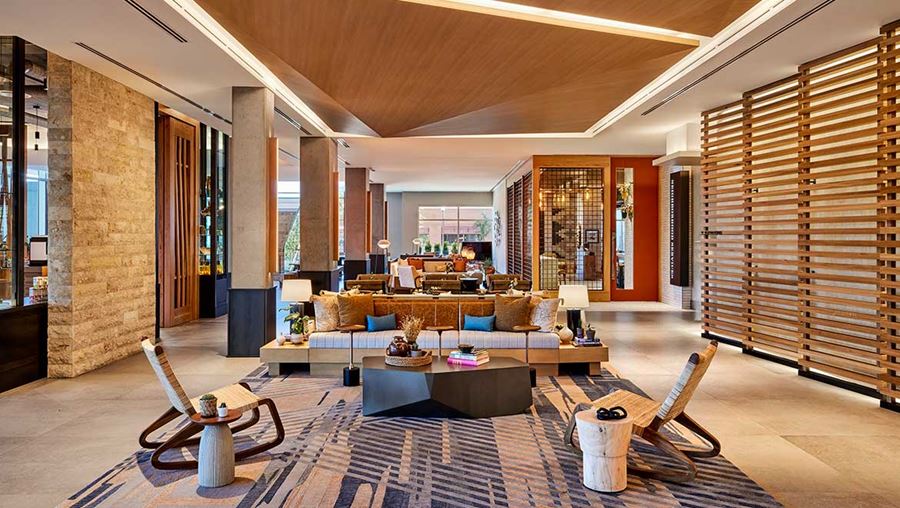
The Omni Tempe Hotel at ASU sits on five acres of Arizona State University land at Mill Avenue and University Drive. It exists as a public-private partnership between Omni, ASU and the City of Tempe, built to host university convenings. The Lab is held there on purpose.
Arizona State has been ranked the most innovative university in America for more than a decade. Tempe is one of the country's leading ecosystems for AI, advanced research and higher-education industry partnerships. The setting is part of the argument. The Lab does its work inside the kind of institution it is helping to build.
Two seats. One price.
For institutions on a Fundmetric program. $2,500 per participant on a client team.
For institutions joining the room for the first time.
Travel and accommodation are not included. Membership in the Advancement Lab Network for the year that follows is included for every institution in the room.
Preferred pricing for clients is intentional. The institutions building this category with us should not pay more for the room they helped shape.
Who's in the room.
Mark Hobbs
CEO, Fundmetric
Mark Hobbs is the CEO of Fundmetric and the author of the paper this convening is built on. He has spent the last decade arguing that advancement is not a fundraising function. It is an enterprise capability running on the wrong infrastructure. The Lab is where he introduces the new operating model that argument points to.
Fundmetric was selected for a six-month Google Canada Residency in Waterloo that accelerated its research on the donor journey. Mark has co-authored peer-reviewed work on machine learning in fundraising, including an IEEE paper on Machine Learning the Donor Journey, and his work is cited in textbooks on the subject. He sits on Canada's Digital Governance Council, the body setting national standards for the responsible architecture of digital systems.
He has been named one of Atlantic Canada's Top 50 Emerging Leaders and is a recipient of the King Charles III Coronation Medal for his contributions to Canadian entrepreneurship. Canada's national newspaper called him a "new tech luminary" for his work bringing modern data infrastructure into a non-tech sector.
Rachel Crosbie
VP Strategy and Operations, Fundmetric
Rachel Crosbie is the VP of Strategy and Operations at Fundmetric. She oversees client activities, business operations and talent management, and is the driving force behind scaling Fundmetric's data capture infrastructure and shaping the company's brand identity.
Dedicated service standards remain a core advantage of Fundmetric, influenced by Rachel's background in the hospitality industry. Rachel brings a unique perspective to her role, emphasizing the importance of customer experience and creative problem-solving.
She is known for building a collaborative work culture that values individual growth, believing that supporting individuals in becoming the best versions of themselves leads to organizational success.
RJ Valentino
President and Co-Founder, The Napa Group
RJ Valentino is the President and Co-Founder of The Napa Group and the facilitator of the Lab. He designs and runs the working sessions. For more than three decades he has been the consultant university and foundation presidents call when an institution is at an inflection point and the next move is not obvious. He works at the level where strategy, governance and people decisions intersect.
The Napa Group advises university and foundation presidents, corporate CEOs and senior leadership teams on the questions that do not fit cleanly inside a single function: organizational design, change management, executive transitions, board development, strategic talent. RJ bridges the for-profit and non-profit worlds, importing the operating disciplines of business into the institutions that need them.
He is the person in the room who makes peer leaders say the harder thing. Advancement 2035 needs that from someone the field already trusts.
Or
Not your seat to take? Put a peer's name forward.
If you know a leader who belongs in the room, nominate them. We reach out directly. No introductions required.
Hold your seat.
Each institution sends two participants. The advancement CEO or SVP. An innovation partner from inside the organization who can translate strategy into operating reality. Attendance is by invitation. Selection is built for strategic peer density, not logo diversity.
A thirty-minute briefing call confirms fit before invitation.